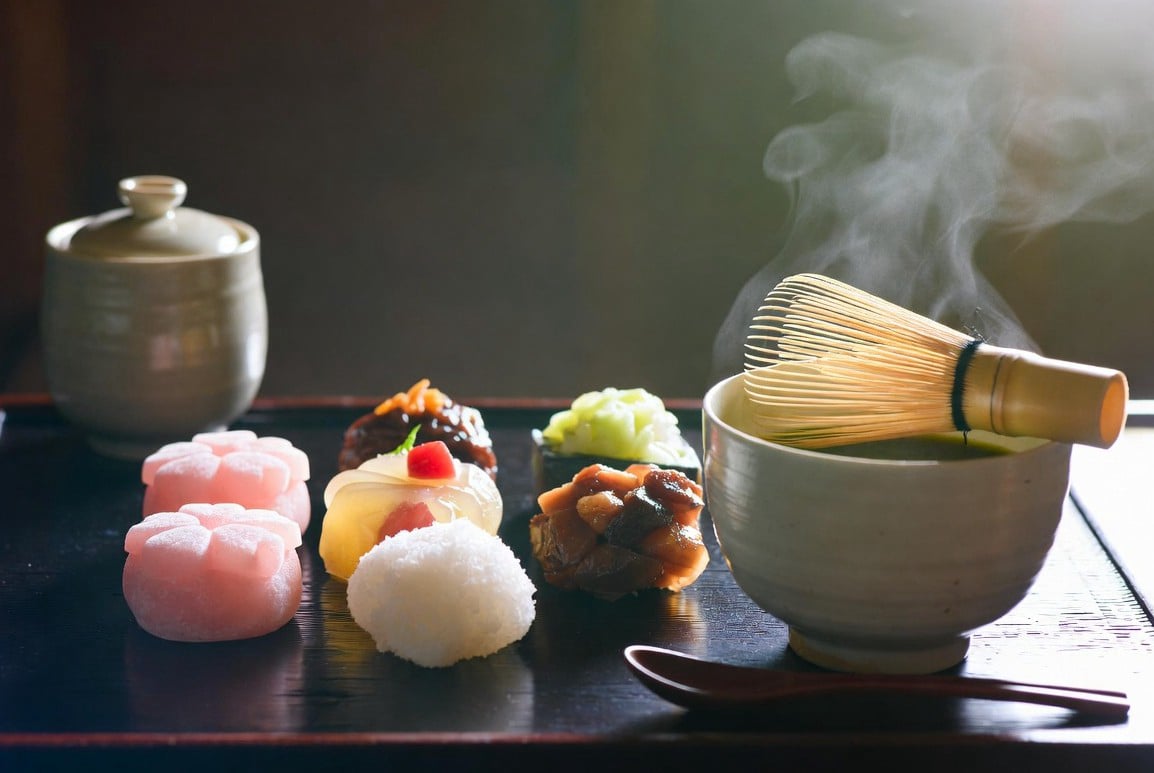
Sweet Rituals: Wagashi and Tea Sweets Through the Seasons
Wagashi are often called the poetry of Japanese cuisine and culinary traditions, and once you taste them, you will understand why. Unlike Western desserts, wagashi are not overwhelmingly sweet. Instead, they celebrate texture, color, and the changing of seasonal dishes. A spring wagashi might be shaped like a cherry blossom and filled with pale pink bean paste; an autumn wagashi could resemble a red maple leaf with chestnut pieces inside. These tea sweets are designed to be eaten alongside bitter matcha, each bite balancing the other. The culinary art of wagashi lies in how they capture a fleeting moment of nature.
The history of wagashi is deeply tied to sake culture and traditional cooking ceremonies. Originally, wagashi were simple dried fruits and nuts offered to guests before tea. Over centuries, Japanese confectioners transformed them into elaborate tea sweets using rice flour, sugar, and azuki bean paste. Some wagashi are so detailed that they resemble miniature sculptures of seasonal plants or landscapes. This level of culinary art requires years of practice, much like preparing sushi or kaiseki. Even today, master wagashi makers follow traditional cooking methods, hand-shaping each piece without molds.
Seasonal dishes dictate the entire wagashi calendar. In early spring, you will find tea sweets infused with sakura leaves and shaped like flower buds. Summer wagashi often use clear agar to create a cooling, jewel-like appearance, sometimes hiding slices of fruit inside. Autumn brings wagashi with roasted soybean flour and chestnut chunks, while winter favors steamed tea sweets with warming spices like ginger. This rhythm of seasonal dishes connects wagashi directly to kaiseki and ramen—all are expressions of Japanese cuisine and culinary traditions rooted in nature's cycle.
Wagashi also appear in everyday life beyond formal tea ceremonies. You can find simpler versions as street food at festivals, or alongside a bowl of ramen as a small dessert. Some wagashi are even grilled or skewered, blurring the line between tea sweets and street food. Despite their delicate appearance, wagashi are surprisingly sturdy—they were originally portable snacks for travelers and samurai. This practical origin reminds us that traditional cooking is not always about luxury. Even the most artistic wagashi carries a history of utility and survival.
The pairing of wagashi with matcha is a ritual worth understanding. The bitterness of the tea clears the palate and makes the subtle sweetness of tea sweets more pronounced. In sake culture, a similar principle applies: dry sake enhances the flavors of sushi and seasonal dishes. Flow Layer Base often recommends attending a wagashi-making workshop if you visit Japan. There, you will see how culinary art flows through the hands of confectioners who refuse to rush. Watching them shape a wagashi is like watching someone write calligraphy—every movement is intentional.
Finally, wagashi teach us to appreciate impermanence. Most tea sweets must be eaten within a day or two of being made. They are not meant to last. In this way, wagashi mirror seasonal dishes in kaiseki and freshly made sushi. The joy of wagashi is the joy of the present moment. Whether you enjoy them in a quiet tea house, as street food at a shrine festival, or after a bowl of ramen, these tea sweets remind us that Japanese cuisine and culinary traditions are alive, changing, and deeply human. Flow Layer Base celebrates wagashi as one of the most beautiful edges of traditional cooking.