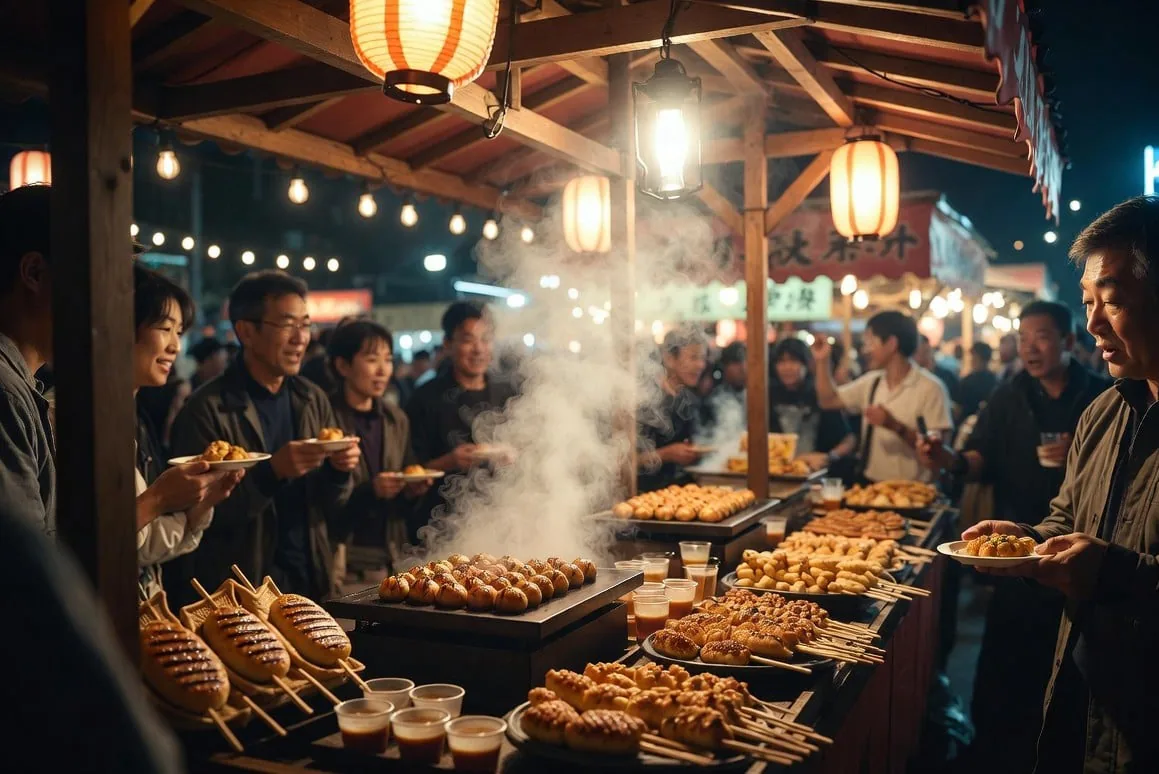
From Yatai to Your Plate: The Honest Joy of Japanese Street Food
Street food in Japan is anything but low status. From yatai stalls glowing in the evening dark to temple fairs buzzing with families, street food represents the most democratic layer of Japanese cuisine and culinary traditions. Here, you will find ramen served from a cart, fresh sushi on a stick, skewered vegetables grilled over charcoal, and even wagashi -inspired tea sweets sold as handheld snacks. Unlike kaiseki or formal sake culture events, street food asks nothing of you except curiosity and an empty stomach. It is traditional cooking made fast, honest, and joyful.
The origins of Japanese street food go back centuries to yatai stalls that served traveling merchants and festival crowds. Ramen itself started as street food before becoming a global icon. Even early forms of sushi were sold as portable street food—vinegared rice topped with fish, meant to be eaten with fingers. This history is still alive in modern street food culture. You can stand at a counter eating freshly grilled yakitori, then walk fifty meters to a stall selling tea sweets shaped like little fish. The variety reflects the full spectrum of culinary art, compressed into small, affordable portions.
Seasonality matters in street food just as much as in kaiseki. Spring street food often features bamboo shoots and young greens grilled on skewers. Summer brings cold ramen salads and shaved ice flavored with seasonal fruit. Autumn street food includes roasted sweet potatoes and chestnut-based wagashi. Winter stalls sell steaming bowls of ramen and oden—a traditional cooking dish of slow-simmered vegetables and fish cakes in soy broth. These seasonal dishes ensure that street food never becomes boring. Each visit to a festival or night market offers something new.
Sake culture also finds a natural home in street food settings. Small cups of local sake or shochu are often sold alongside grilled street food skewers. This informal pairing is the opposite of a formal kaiseki sake ceremony, yet it follows the same principle: drink complements food. Some street food areas in Japan even have standing bars where you can sample different sakes while eating sushi -style bites or ramen -derived snacks. This relaxed side of sake culture is accessible to everyone, including travelers who might feel intimidated by kaiseki restaurants.
The culinary art of street food should not be underestimated. A takoyaki maker spins octopus-filled batter balls with two metal picks, achieving perfect roundness through pure muscle memory. A sushi stall chef slices fish so thin you can see light through it. A wagashi vendor shapes tea sweets right in front of you, using the same traditional cooking techniques as a high-end confectioner. Street food is not simplified Japanese cuisine and culinary traditions—it is the same skills applied in a faster, louder environment. That honesty is its own kind of beauty.
Flow Layer Base believes that street food is the best introduction to Japanese cuisine and culinary traditions for first-time visitors. You do not need to understand sake culture or kaiseki etiquette to enjoy a grilled skewer or a warm bowl of ramen from a yatai. Street food teaches you about seasonal dishes through your taste buds, about traditional cooking through your eyes, and about community through shared space. Whether you end your night with wagashi -style tea sweets or a final cup of sushi -broth, street food will always welcome you. That is the honest joy we celebrate at Flow Layer Base.